Rockstar Announces and Releases a GTA VI Extended Look
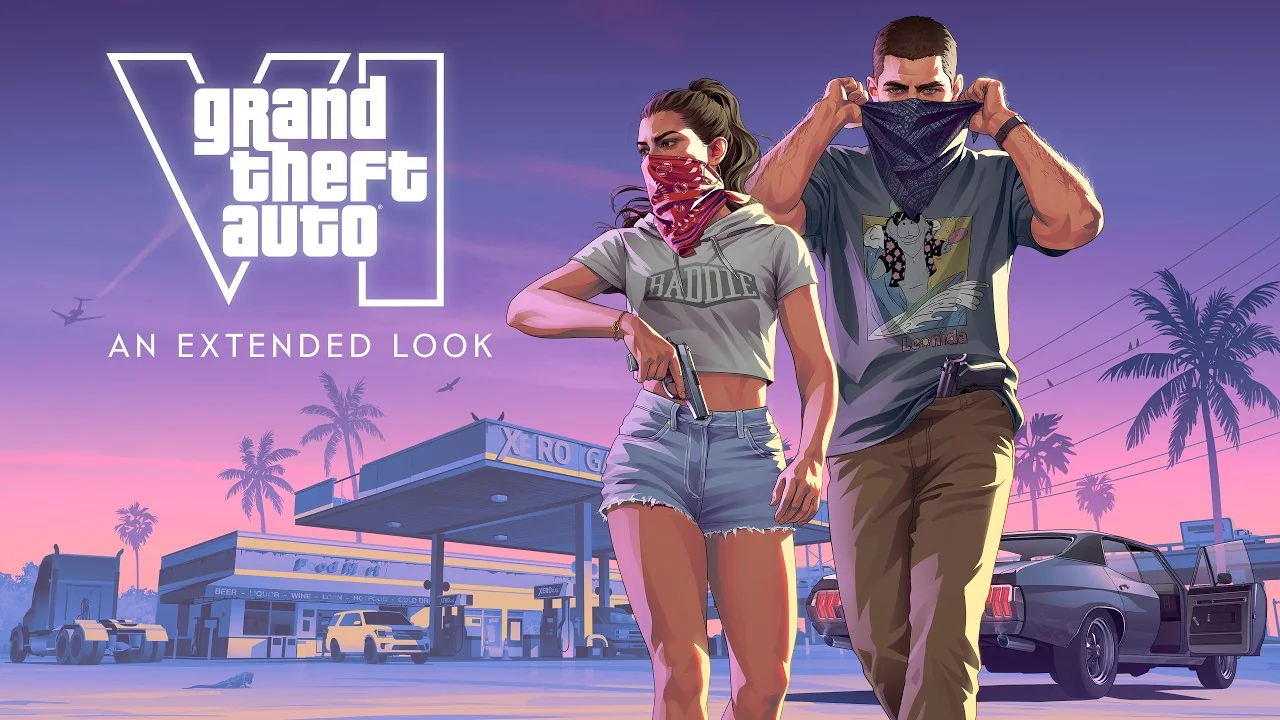
Rockstar released Grand Theft Auto VI: An Extended Look on August 27, 2026. The company announced the video three weeks earlier, scheduling its Netflix premiere for 3 p.m. Eastern Time and its appearance on the official Rockstar YouTube channel and GTA VI site for 9 p.m. Eastern Time. The later Newswire post confirmed that the video was available. These separate announcements establish both the planned distribution and the completed release, so the piece can be described as a published showcase rather than a future event.
Rockstar’s most concrete production detail is that the extended look was captured entirely from in-game footage on PlayStation 5. That statement gives viewers useful provenance: the images were produced from the game running on the named console rather than assembled solely from pre-rendered cinematic material. It does not disclose the console model, graphics mode, resolution, frame rate, final retail settings, or whether every shot represents uninterrupted player-controlled gameplay. The careful reading is that Rockstar identifies the source of the footage, while performance testing and feature comparisons remain separate questions.
What the showcase can confirm
The extended look is an official promotional video published through multiple channels. Its release post repeats the then-current date of November 19, 2026 and lists PlayStation 5 and Xbox Series X|S. The announcement therefore confirms what Rockstar was saying about the schedule and the two console platforms at that point. The official page now lists the video as playing and carries the current game information. If another date announcement appears, that newer statement would take precedence over the video post’s older schedule reference.
Rockstar described the footage as showing the “biggest, most immersive evolution” of the series. That is the publisher’s characterization, not a measurable specification or independent assessment. The video can demonstrate the images and scenes Rockstar chose to publish, but those selections are not a complete catalogue of locations, missions, systems, or activities in the finished game. A showcase has an editorial shape: the developer decides what to reveal, how to sequence it, and which moments to emphasize. It is evidence of what was shown, not proof that unshown features do not exist or that every part of the game will look exactly the same.
The distinction between in-game footage and a playable demo is also important. A video can use game assets and still be edited, captured under controlled conditions, or assembled from selected moments. Rockstar’s description does not call this an interactive demo or promise that viewers can reproduce each camera angle in ordinary play. Describing it simply as an extended look keeps the coverage aligned with the company’s wording and avoids treating an edited trailer as a technical benchmark.
Why the release channels matter
The staggered schedule gave viewers more than one official way to watch. Netflix received the earlier premiere, followed later the same evening by Rockstar’s YouTube channel and the GTA VI website. The schedule announcement made those destinations and times explicit; the release-day post then reported that the video was available on those services. That distribution detail is useful because viewers in different regions may encounter the video through different apps or at different local times. The company’s Eastern Time schedule is the source for the original timing, while the subsequent post is the source for its release status.
The game site serves a different role from a one-off video page. It links the showcase to the game’s broader official information, including the release date, platforms, and other media. A viewer can return to the site to check for later official updates rather than relying on an old trailer description copied into an unrelated post. The live site is still a publisher source, not a third-party technical review, but it is the most direct place to confirm what Rockstar currently lists.
Multiple hosting platforms do not make the trailer itself multiple pieces of evidence about the game. Each upload distributes the same company-produced material. When reporting factual details, the primary questions are who created the video, what the publisher says about the footage, when it was released, and which platforms Rockstar lists. Repeated uploads, reaction videos, view counters, or commentary channels can add audience discussion, but they do not independently verify the development build or explain how the retail version performs.
What it does not establish
The announcement did not call the video a regional map tour, identify a production company for the capture, or provide a complete walk-through of the state of Leonida. Those descriptions should not be added without direct evidence from the video or a source that names those details. Similarly, the footage does not establish the final size of the world, the number of missions, the length of the campaign, or the full cast. Those are separate facts that require separate official disclosures or reliable reporting.
Visuals in a trailer also should not be converted into universal claims about technical performance. A sequence captured on PS5 tells viewers the named console was used for the promotional footage, but the post does not say which of the PS5’s hardware variants or settings were selected. It offers no frame-rate graph, image-quality comparison, or performance data for Xbox. Readers wanting those measurements will need independent tests on retail hardware after release. Until then, the studio’s footage is best treated as representative promotional material, not a substitute for platform-specific testing.
The schedule information has its own limits. The August 27 post says the game was coming November 19 on PS5 and Xbox Series X|S, and Rockstar’s site lists that date in the current plan. Neither statement guarantees that no subsequent revision can happen. News articles should identify the date as the company’s announced schedule and record the time the source was checked. In this article, that means distinguishing the showcase’s August release from the game’s later planned launch date.
In short, the extended look is a released Rockstar video that was scheduled for Netflix and then the company’s YouTube and GTA VI site. Rockstar says its footage was captured in-game on PS5, and the release post repeated the then-current November 19 console date. Those facts make the video a useful official preview. They do not establish the complete map, final performance across platforms, or exact contents of the finished game. Keeping that scope clear lets readers learn what the studio chose to show without turning a promotional presentation into unsupported reporting.
Sources
- Rockstar Games: Grand Theft Auto VI: An Extended Look
The August 27, 2026 premiere timing and distribution on Netflix, YouTube, and the official GTA VI site.
- Rockstar Games: Grand Theft Auto VI: An Extended Look — Now Playing
The August 27 release, official streaming destinations, in-game footage captured on PlayStation 5, and the November 19 console release date.
- Rockstar Games: Grand Theft Auto VI: An Extended Look
Rockstar’s official video description and footage provenance.
- Rockstar Games: Grand Theft Auto VI
The official site’s current release listing and video status.