Valve Opens Steam Machine Reservations from $1,049
Valve opened reservations for its 2026 Steam Machine in June, with the first shipments scheduled to begin June 29. Ars Technica reported U.S. prices of $1,049 for the 512GB model and $1,349 for the 2TB model. Those prices applied to the computer without a Steam Controller; the report listed the controller as a separate $79 addition. Because Valve expected the first supply to be limited, it used a randomized reservation order instead of treating the opening minutes as a race to check out.
The reservation window and its eligibility conditions were part of that June launch process, not a promise of current availability. Ars reported that sign-ups closed on June 25 and that a Steam account needed a purchase before April 27, 2026, with one reservation per household. After the deadline, Valve randomized the entries into an order and notified participants whether they had a place in the initial batch or had joined a later waitlist. Those dates have passed; anyone checking the product now should use the live Steam listing for the current purchase or waitlist status in their region.
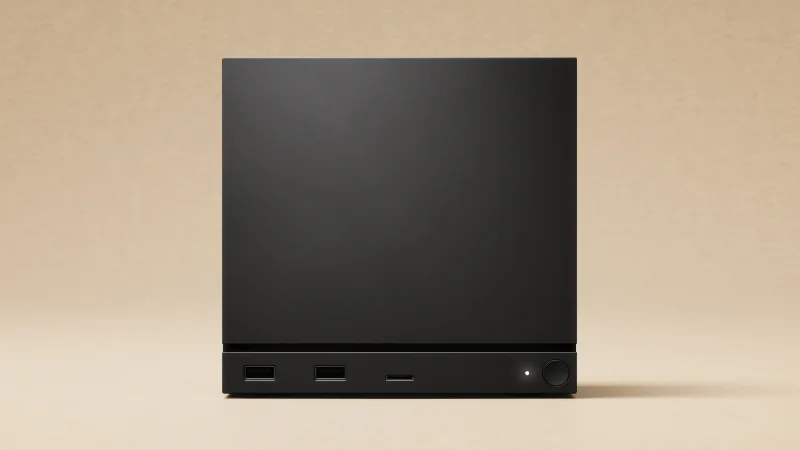
What Valve’s specifications describe
Valve presents the Steam Machine as a compact PC designed around SteamOS and television use. The hardware page lists a semi-custom six-core, twelve-thread AMD Zen 4 processor and a semi-custom AMD RDNA 3 graphics processor with 28 compute units. The system has 16GB of DDR5 memory and 8GB of GDDR6 video memory. These are the published components, not a promise that every game will render at a particular resolution or frame rate.
Both storage options use an NVMe solid-state drive, with 512GB and 2TB configurations. Valve also lists a microSD slot, Wi-Fi 6E, Bluetooth 5.3, Gigabit Ethernet, and an integrated wireless adapter for Steam Controller connectivity. The compact enclosure measures about 152 millimeters high, 162.4 millimeters long, and 156 millimeters wide, and weighs about 2.6 kilograms. These details matter for a living-room setup: the device is meant to sit near a display and be connected to a network, controller, and power source like a small desktop PC.
Its video connections include DisplayPort 1.4 and HDMI 2.0. Valve lists output capabilities of up to 4K at 120Hz over HDMI and up to 4K at 240Hz over DisplayPort, with higher display modes also listed for DisplayPort. Those are connection limits. They describe what the port can send to a supported screen, not the performance that an individual game will achieve. Rendering depends on the title, graphics settings, operating-system support, and whether the game uses scaling techniques.
The operating system is SteamOS 3, based on Arch Linux, with KDE Plasma available for desktop use. That gives the product two recognizable modes: a console-like interface for launching games from the couch and a more traditional computer desktop for other tasks. This arrangement distinguishes the Steam Machine from a closed console, but it does not mean every Windows PC game automatically runs flawlessly. Linux compatibility, anti-cheat support, game updates, and peripheral behavior can vary by title, so players should check the Steam compatibility information for the games they care about.
How the queue worked
Valve’s randomized queue was designed for an initial batch whose quantity was constrained. Under the reported process, an eligible user selected a model and submitted a reservation before the deadline. The order of sign-ups did not guarantee a place near the front: Valve randomized the entries once the window closed, then communicated whether a unit had been assigned from the launch batch or whether the account remained on a waitlist. This structure changes the question from “How fast was your internet?” to “Where did the randomized entry fall?”
A waitlist is not the same as a confirmed order, and a reservation is not necessarily a purchase. The reported process separated the expression of interest from the eventual opportunity to pay and receive a system. That distinction matters when reading launch coverage: headlines saying reservations opened can be mistaken for a conventional preorder where any shopper can immediately complete checkout. In this case, limited stock and the randomized selection were central parts of the launch story.
Eligibility rules also served as practical controls. The reported account-purchase cutoff and one-per-household limit were intended to reduce duplicate or speculative entries. They did not ensure that every eligible user would receive a system, and they should not be treated as proof that no reseller could participate. The safe factual description is the one in the report: Valve specified account and household conditions and used a randomized order for the first allocation.
Reading the price in context
The gap between the two U.S. models is $300, while the main listed difference between them is storage capacity. Buyers comparing them should ask whether their installed game library justifies the additional SSD space, because the GPU and processor specifications are the same across the two configurations. The separate controller bundle raises either model’s total further. Taxes, shipping, local currency conversion, and regional retail terms can also change the amount a customer ultimately pays.
Valve’s product page is the primary source for hardware specifications, while the reservation announcement and reporting establish the June pricing and ordering process. Keeping those source roles separate prevents a common mistake: attributing every price and logistical detail to the technical specification sheet. Ars Technica reported the U.S. prices, queue deadline, and shipping schedule after Valve disclosed them. Valve’s own page describes the device and its ports, components, and software.
Valve lists video output up to 4K at 60Hz, which describes the signal the system can send rather than a universal game-performance target. Resolution and frame rate will depend on the title and its settings. The published material does not establish a specific AI-related memory shortage or per-unit profit, so those figures should not be presented as confirmed facts.
For a reader considering the device, the practical comparison is between this prebuilt, living-room-sized SteamOS PC and other options that can run a Steam library: a desktop, a compact gaming PC, a console, or a handheld docked to a television. Their prices and performance depend on configuration and market. There is no single comparison that makes the Steam Machine automatically cheaper or faster for every household. The distinct value proposition is the integration of a small enclosure, SteamOS interface, Steam library access, and a living-room-oriented form factor.
That proposition is separate from whether $1,049 is a comfortable price. A higher price raises the stakes for buyers, especially when the base model includes 512GB of storage and the controller costs extra. But value is personal: one player may prioritize a compact box and familiar Steam account, while another may prefer an upgradeable desktop or a console with a lower upfront cost. Reporting can give readers the model, specifications, price, and queue terms; it cannot decide which trade-off fits an individual budget.
The historically accurate summary is narrow but useful: Valve began the June 2026 reservation process with reported U.S. prices of $1,049 and $1,349, used a randomized allocation for limited first-batch stock, and listed June 29 as the start of shipping. The published Steam Machine is a small SteamOS computer with two storage tiers and PC-class components. Those facts do not guarantee present stock, identical pricing in every country, or a fixed level of performance in every game. Checking the current regional listing is essential for any purchase decision after the original reservation window.
Sources
- Valve / Steam Hardware: Steam Machine
Valve’s official hardware specifications and product information.
- Ars Technica: Valve’s Steam Machine Ships June 29 for $1,049
The reported U.S. configurations, prices, reservation process, and expected limited availability.